
Zugarramurdi & Urdax from Sunbilla: caves, witchcraft history and one-day guide

Zugarramurdi and Urdazubi/Urdax make up one of the most distinctive day trips in northern Navarra. Within just a few kilometres you can visit two completely different caves, a village closely linked to the history of witchcraft trials, a museum, a historic monastery, forest paths and one of the most characterful border areas in the region.
From Sunbilla, this is a natural full-day excursion. It also fits neatly into a longer stay that includes Xareta, the Baztan Valley, Bertiz and other attractions in northern Navarra without changing accommodation.
Zugarramurdi and Urdax: quick answer for planning your day
• Zugarramurdi: huge open cave, Witch Museum, rural village and historical memory of the Inquisition-era witchcraft trials.
• Urdazubi/Urdax: Ikaburu cave with stalactites and stalagmites, guided visit, San Salvador Monastery, mill and village centre.
• Distance between the caves: roughly 8 km according to Navarra tourism information.
• Recommended time: a full day if you want to visit both places without rushing.
• Advance booking: particularly useful for Urdax, where the cave visit is guided and time slots vary by season.
• Best strategy: do Zugarramurdi in the morning and Urdax afterwards, or reverse the order according to your guided cave slot.
1. Zugarramurdi Cave: a very different kind of cave
Zugarramurdi Cave lies about 400 metres from the village, reached by a short woodland walk. It is not the classic tourist cave filled with stalactites and stalagmites. Its appeal comes from the scale of the open cavern, the outdoor route and the dramatic landscape shaped by water.
Navarra tourism presents it as the symbol of Zugarramurdi and a place closely connected with legends of akelarres and with the memory of people accused of witchcraft. Today that history is best understood through both cultural tradition and documented persecution, rather than treating later legends as literal historical evidence.
Interior of Zugarramurdi Cave. Photo: Mariesarahpy / Wikimedia Commons, CC BY-SA 4.0.
2. What really happened in Zugarramurdi
Zugarramurdi's fame is tied to early 17th-century witchcraft proceedings and the actions of the Spanish Inquisition. Over time, stories of sabbaths, mythology and night gatherings became intertwined with the documented history of people who were investigated, prosecuted or punished.
That makes it useful to separate two layers when visiting: local legend and popular culture on one side, and the historical record of accusations and inquisitorial proceedings on the other. The Witch Museum is designed to provide that context.
3. The Witch Museum
The Witch Museum is the natural companion to the cave. Its displays explore the social background of witchcraft beliefs, the role of the Inquisition, local mythology and the position of women as healers and carriers of traditional knowledge.
If you want to understand Zugarramurdi beyond the famous cave photographs, it is worth including. Visiting the museum before the cave works particularly well because the landscape then has much more historical meaning.
4. Ikaburu Cave in Urdazubi/Urdax
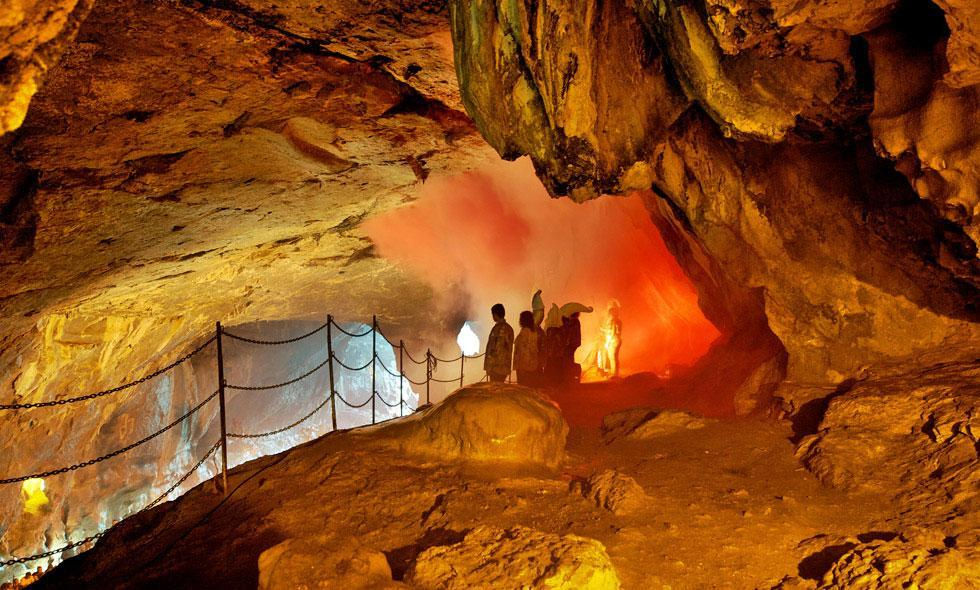
A few kilometres away, Urdax offers a completely different experience. Ikaburu is an enclosed cave shaped by the Urtxume River over thousands of years. Here you do find limestone formations such as stalactites and stalagmites, and the visit is organised with a guide.
Navarra tourism notes evidence of human presence in the cave dating back more than 20,000 years and records its use as a refuge during later historical periods. Today's visit focuses on geology, underground water, cave formations and local legends associated with the lamias.

Ikaburu Cave, Urdazubi/Urdax. Photo: Javier Martinlo / Wikimedia Commons, CC BY-SA 3.0 ES.
5. Urdax cave opening times and tickets
Urdax cave schedules change according to season and visitor demand. The official website recommends buying tickets online to secure a place and stresses punctuality because visits operate in scheduled guided slots.
High season normally offers more daily departures, while Monday is closed during much of the rest of the year. Before leaving Sunbilla, check the official schedule for that date and build the rest of the day around your reserved time.
6. Urdazubi/Urdax: more than the cave
The village itself deserves time. Its identity is closely connected with water, bridges and channels, while the centre preserves heraldic houses and an attractive Pyrenean setting. It is an easy place to explore before or after Ikaburu.
Navarra tourism also highlights San Salvador Monastery and the old mill. Together they make Urdax a genuine heritage stop rather than simply the location of a cave tour.

San Salvador Monastery, Urdazubi/Urdax. Photo: Uranzu / Wikimedia Commons, CC BY-SA 4.0.
7. San Salvador Monastery
San Salvador Monastery is closely linked to the history of Urdax and the Baztan Way of Saint James. Official tourism information traces its origins to a medieval religious community and highlights its cloister, exhibition areas and role in the development of the village.
Its pinkish local stone and immediate surroundings make it a photogenic and convenient stop during a walk around Urdax.
8. The Blue Pottoka trail and Xareta
Zugarramurdi and Urdax are part of Xareta, a cross-border area where forests, farmhouses and caves create a natural continuity between Navarra and the French Basque Country. Navarra tourism refers to the Blue Pottoka trail as a walking connection between Zugarramurdi, Urdax and Sare.
You do not need to complete the whole trail to appreciate the area, but knowing it exists helps explain that these caves are not isolated attractions: they belong to the same natural and cultural landscape.
9. Can you visit both caves in one day?
Yes, and for most visitors this is the most efficient way to organise the trip from Sunbilla. The caves are roughly 8 kilometres apart. The main factor determining the order of the day is the reserved guided-visit time at Ikaburu.
If your Urdax slot is in the morning, use the afternoon for Zugarramurdi. If it is later, start with the Witch Museum and Zugarramurdi Cave and continue to Urdax afterwards.
10. A one-day route from Sunbilla
A balanced itinerary can begin early in Sunbilla, continue to Zugarramurdi for the museum and cave, then move on to Urdax for lunch, a village walk and the Ikaburu visit at the booked time.
If time remains, add the monastery, the mill or a short stop elsewhere in Xareta. Trying to squeeze Elizondo, Bertiz and several other attractions into the same day usually adds more driving than value.
11. Zugarramurdi and Urdax with children
This is a strong family excursion because it combines woodland, caves, history and very different visual environments. The guided visit in Urdax adds structure and explanation, while Zugarramurdi's open cave helps children grasp the scale of the landscape.
Use footwear with good grip, bring a light extra layer for Urdax and supervise children carefully on damp or uneven ground. Always check the latest visitor conditions before setting out.
12. What to bring and when to go
The Atlantic climate can change quickly. Even on a clear morning, a waterproof layer and footwear suitable for damp ground are sensible. Ikaburu is also cooler inside than outside.
Spring, summer and early autumn are particularly convenient for combining caves with village walks, although visits run through much of the year. At weekends, holiday periods and in high season, advance booking is the safest option.
Where to stay for Zugarramurdi and Urdax
El Eco de los Robles is in Sunbilla and works as a practical base for exploring northern Navarra without changing accommodation every day. The house is rented as a whole property, sleeps six guests with two additional places available, and includes a garden, seasonal pool, barbecue area and private parking.
From one base you can devote a day to Zugarramurdi and Urdax, another to Elizondo and Baztan, another to Bertiz and another to the Bidasoa Greenway. This structure lets you explore more of the region at a realistic pace.
Frequently asked questions about Zugarramurdi and Urdax
Which is more worth visiting, Zugarramurdi or Urdax?
They complement each other: Zugarramurdi is known for its huge open cave, witchcraft history and museum; Urdax for the Ikaburu cave, its limestone formations, the village and San Salvador Monastery.
Can you visit Zugarramurdi and Urdax on the same day?
Yes. They are close together and Navarra tourism commonly presents them as a combined excursion. Booking the guided Urdax cave visit in advance is advisable.
How far apart are the Zugarramurdi and Urdax caves?
Navarra tourism places the Urdazubi/Urdax caves at about 8 kilometres from the caves of Zugarramurdi.
Does Zugarramurdi cave have stalactites?
That is not its main attraction. Zugarramurdi is a large open cave shaped by water and famous for its history and legends, while stalactites and stalagmites are characteristic of Ikaburu in Urdax.
Do you need to book Urdax caves?
The official site recommends buying tickets online to secure a visit because schedules and guided slots vary by season and guide availability.
Is the excursion suitable for children?
Yes. It combines caves, woodland and short village walks. Wear footwear with good grip and take an extra layer for the cooler, damp cave environment.
Where should you stay to visit Zugarramurdi and Urdax?
Sunbilla is a practical base for combining Xareta, Baztan, Bertiz and the Bidasoa Greenway. El Eco de los Robles offers a whole rural house for families and groups.
Sources consulted
Official Navarra tourism information on the caves of Zugarramurdi and Urdazubi/Urdax, the Witch Museum, Xareta and Urdax heritage sites.
Official Urdax Caves information on opening times, guided slots, online booking and visitor conditions. Editorial review: September 2026.
Image credits
Cover image: Eneko Bidegain / Wikimedia Commons, Caves of Zugarramurdi, CC BY 2.0.
Interior image 1: Mariesarahpy / Wikimedia Commons, Zugarramurdi Cave, CC BY-SA 4.0.
Interior image 2: Javier Martinlo / Wikimedia Commons, Ikaburu Cave in Urdax, CC BY-SA 3.0 ES.
Interior image 3: Uranzu / Wikimedia Commons, San Salvador Monastery in Urdax, CC BY-SA 4.0.


Comments